
The modern classroom has evolved far beyond chalkboards and static textbooks. Today, teachers are increasingly turning to gamified learning platforms to capture the attention of digital-native students. Among the most popular contenders in this “edutainment” arena are blooket vs gimkit. Both platforms use game mechanics to transform traditional multiple-choice questions into interactive experiences, but they do so in fundamentally different ways. While one leans into collectible “Blooks” and variety, the other focuses on a complex in-game economy and strategy. Deciding which is better for learning requires a deep dive into their mechanics, engagement strategies, and pedagogical impact.
The Evolution of Gamified Learning
Gamification is not just about making school “fun”; it is a pedagogical strategy designed to increase student engagement, motivation, and retention. Platforms like blooket vs gimkit leverage the psychology of reward systems to encourage students to answer questions repeatedly. This “repetition without boredom” is a key driver for long-term memory retention. While legacy tools like Kahoot pioneered the space with a simple, synchronized quiz format, blooket vs gimkit represent a “second generation” of classroom gaming that integrates deeper gameplay loops reminiscent of actual video games.
Core Mechanics: How Blooket and Gimkit Differ
Blooket’s primary appeal lies in its sheer variety of game modes. In a single week, a teacher could host a “Tower Defense” game, a “Cafe” management simulation, or a high-stakes “Gold Quest.” Each mode uses the same question set but offers a completely different gameplay experience. This variety prevents “game fatigue” and allows teachers to cater to different student preferences. Students earn “Blooks”—collectible animal avatars—which they can use to represent themselves in games, adding a layer of collection and personalization that particularly resonates with elementary and middle school students.
Gimkit, conversely, was designed by a high school student to be the kind of game he actually wanted to play in class. Its defining feature is a persistent in-game economy. Instead of just earning points, students earn “virtual cash” for correct answers. This cash can be reinvested into a “Shop” to buy power-ups, multipliers, and “insurance” for wrong answers. This creates a strategic layer where students must decide whether to answer questions quickly for immediate gains or save up for massive upgrades that could propel them to the top of the leaderboard later.
Detailed Feature Comparison for Educators

When evaluating these platforms for learning, teachers must consider factors such as ease of use, data analytics, and cost. While both offer free versions, their limitations vary significantly. Blooket is generally seen as more “generous” with its free tier, allowing for a wide range of game modes and a player cap of up to 60 students. Gimkit’s free version is more restrictive, often limiting teachers to a small number of “Kits” and nudging users toward a paid subscription for full access to its rotating seasonal modes.
| Feature | Blooket | Gimkit |
| Primary Focus | Variety and Character Collection | Strategy and In-Game Economy |
| Engagement Tool | “Blooks” (Avatars) and Mini-Games | “Cash,” Power-ups, and Strategy |
| Game Modes | 12+ (Tower Defense, Racing, Cafe, etc.) | 10+ (Classic, Trust No One, Fishtopia, etc.) |
| Free Tier Limit | Up to 60 players per game | Limited Kits and editing restrictions |
| Best For | Elementary to Middle School | Middle to High School |
| Data Reporting | Basic accuracy and performance | Detailed real-time formative insights |
| Student Agency | Choosing game-specific strategies | Collaborative question creation (KitCollab) |
Pedagogical Impact: Learning vs. Gaming
A common criticism of both platforms is that the “game” can sometimes overshadow the “learning.” In Blooket’s “Gold Quest,” for example, a student might answer every question correctly but still lose because another student “stole” their gold through a random game event. This introduces a heavy element of luck, which can be frustrating for highly competitive students but serves to level the playing field for those who struggle academically. It ensures that the strongest students don’t always win, keeping the entire class engaged until the final second.
Gimkit’s strategy-heavy approach is more meritocratic but also more complex. Students who understand the economy will often outperform those who simply focus on the questions. However, Gimkit excels at formative assessment. Its data dashboard provides teachers with instant, granular feedback on which questions the class is struggling with. Features like “KitCollab” allow students to contribute their own questions, fostering a higher level of Bloom’s Taxonomy by requiring them to evaluate and create content rather than just consume it.
Target Audience and Classroom Suitability
Research suggests that Blooket is particularly effective for younger learners (grades K-8). The colorful, friendly animal “Blooks” and the simple mechanics of modes like “Racing” or “Factory” are easy to grasp and highly motivating for children. The platform is also a favorite for English as a Foreign Language (EFL) teachers, as it reduces learning anxiety and provides a safe space for vocabulary drill and practice.
Gimkit tends to find more favor in high schools. The “Trust No One” mode, inspired by popular social deduction games like Among Us, is a massive hit with teenagers. Older students often appreciate the “Tycoon” aspects of the game, finding the strategic investment of virtual currency more rewarding than collecting digital avatars. For high school teachers, Gimkit is a powerful tool for review sessions that require sustained focus over longer periods.
Cost and Sustainability for Schools
Pricing is often the deciding factor for individual teachers. As of early 2026, Blooket Plus remains a relatively affordable option, often priced around $5 per month for individual teachers, offering enhanced reports and larger player limits. Gimkit Pro has traditionally been more expensive for individuals but offers robust “Department” and “School” licenses (ranging from $650 to $1,000 per year) that make it an attractive investment for entire campuses.
Final Verdict: Which Should You Choose?
The “better” platform depends entirely on your specific classroom needs. If you are looking for a low-pressure, high-variety tool that will keep younger students excited about vocabulary and basic facts, Blooket is the winner. Its generous free tier and collectible nature make it an easy entry point for gamification.
However, if you want a deeply strategic, data-driven experience for older students, Gimkit is superior. Its ability to turn a simple quiz into a complex economic simulation keeps students engaged in “deep work” for much longer. While it has a steeper learning curve and a higher cost, the level of student agency provided through features like KitCollab offers a higher educational ceiling.
FAQs
Q1: Can I use my existing Quizlet sets on these platforms?
Yes, both Blooket and Gimkit allow you to import your existing flashcard sets from Quizlet, making it easy to transition your current curriculum into a game format.
Q2: Do students need an account to play?
No. Students can join a game simply by entering a code provided by the teacher. However, creating a free account allows them to save their progress and “Blooks” in Blooket or currency in Gimkit.
Q3: Is Blooket or Gimkit better for remote learning?
Both platforms offer Homework Mode (asynchronous play), but Blooket’s variety of solo-friendly games like “Tower of Doom” often makes it slightly more engaging for students working independently at home.
Q4: Can I limit the “luck” factor in Blooket?
Only slightly. While some modes are more skill-based than others, the “random events” are a core part of Blooket’s DNA. If you want a purely skill-based competition, Gimkit’s “Classic” mode” is a better fit.
Q5: What is the maximum number of players?
On the free tier, Blooket typically supports up to 60 players, while Gimkit’s free limits vary but are generally lower. Both platforms offer significantly higher limits (300+) on their paid “Pro” versions.
Q6: Are these platforms safe for student privacy?
Yes. Both platforms are widely used in schools and comply with standard student data privacy regulations. However, teachers should always check their specific district’s approved software list.
Q7: Which game mode is most popular for student collaboration?
In Blooket, “Tower Defense” (team mode) is excellent for collaboration. In Gimkit, the “Trust No One” mode is ideal for encouraging students to communicate and work together.
Conclusion
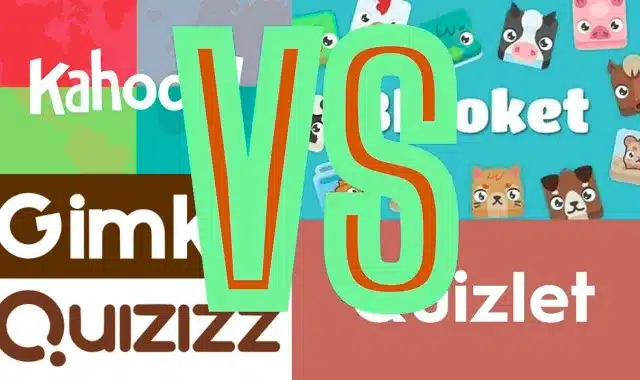
Ultimately, the Blooket vs. Gimkit debate doesn’t have a single winner—it has two specialists. Blooket is the “fun-first” variety pack that excels at keeping energy high and anxiety low, making it a perfect fit for foundational learning. Gimkit is the “strategy-first” simulation that challenges students to think critically about their progress, making it ideal for higher-level review and mastery. By rotating between both, educators can leverage the unique strengths of each to create a truly dynamic and engaging learning environment.